Challenge
Techniques such as high-throughput chromosome conformation capture (Hi-C) have provided a wealth of information on nucleus organization and genome important for understanding gene expression regulation. Genome-wide association studies (GWAS) have identified numerous loci associated with complex traits. Expression quantitative trait loci (eQTL) studies have further linked the genetic variants to alteration in expression levels of associated target genes across individuals. However, current joint analyses of Hi-C and eQTLs data lack advanced computational tools, limiting what can be learned from these data.
Approach
Using ALCF computing resources, the research team is generating models to study the structural basis of genome folding and its functional implications, thereby providing comprehensive maps of how genes at various loci adopt distinct spatial configurations, influence cellular states, and modulate gene expression.
Results
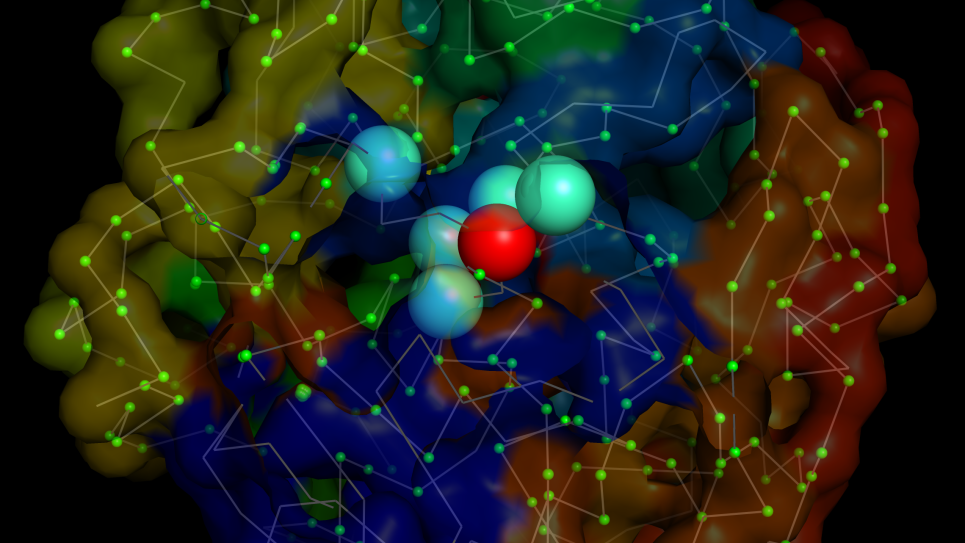
The researchers have developed a computational method for simultaneous analysis of Hi-C and eQTL data, capable of identifying a small set of non-random interactions from all Hi-C interactions. Using these non-random interactions, they reconstructed large ensembles of high-resolution single-cell 3D chromatin conformations with thorough sampling, accurately replicating Hi-C measurements. The results revealed many-body interactions in chromatin conformation at the single-cell level within eQTL loci, providing a detailed view of how 3D chromatin structures form the physical foundation for gene regulation, including how genetic variants of eQTLs affect the expression of associated eGenes. Furthermore, the method used can deconvolve chromatin heterogeneity and investigate the spatial associations of eQTLs and eGenes at subpopulation level, revealing their regulatory impacts on gene expression.
Impact
The researchers’ analysis will delineate tissue-specific master regulatory interactions and conserved interactions across cell types. It will also characterize chromatin structural heterogeneity by identifying major structural clusters in cell subpopulations. Moreover, the work will lead to a high-quality database of enhancer-gene target pairs and enable machine learning predictors to identify them across the genomes of various cell types. The approach taken is crucial for understanding genome topology, gene expression, and discovering potential causal genes for noncoding risk variants identified in GWAS.
Publications
Du, L., H. Farooq, P. Delafrouz, and J. Liang. “Structural Basis of Differential Gene Expression at eQTLs Loci from High-Resolution Ensemble Models of 3D Single-Cell Chromatin Conformations,” Bioinformatics (January 2025), Oxford University Press.
https://doi.org/10.1093/bioinformatics/btaf050
*The original PI of this project, Professor Jie Liang of UIC, passed away in December 2024.