Energy Exascale Earth System Model

PI Aaron Donahue, Lawrence Livermore National Laboratory
Co-PI Chris Terai, Lawrence Livermore National Laboratory
Mark Taylor, Sandia National Laboratories
Ben Hillman, Sandia National Laboratories
Naser Mahfouz, Pacific Northwest National Laboratory
Walter Hannah, Lawrence Livermore National Laboratory
Peter Bogenschutz, Lawrence Livermore National Laboratory
Peter Caldwell, Lawrence Livermore National Laboratory
Ruby Leung, Pacific Northwest National Laboratory
Azamat Mametjanov, Argonne National Laboratory
Sarat Sreepathi, Oak Ridge National Laboratory
Susannah Burrows, Pacific Northwest National Laboratory
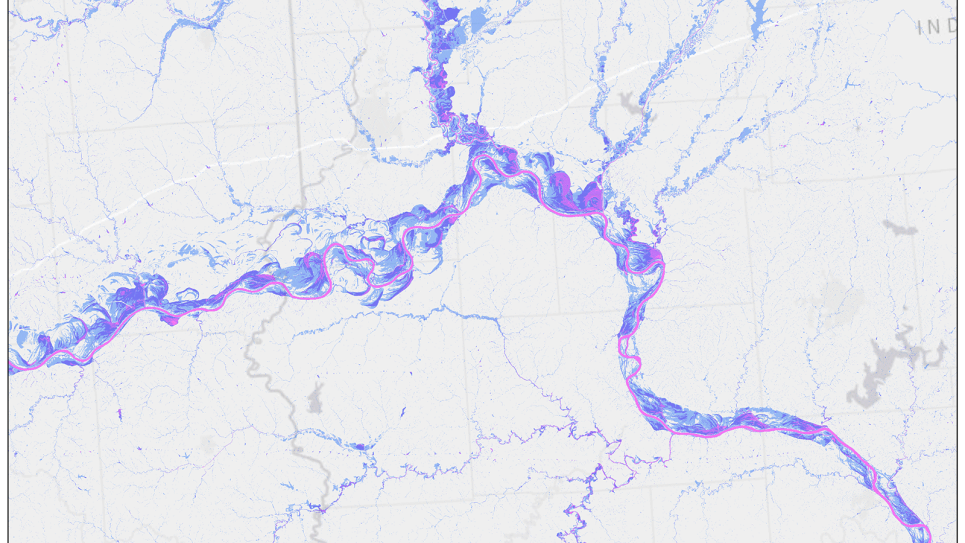
Regionally refined E3SM model run at sub-kilometer resolution

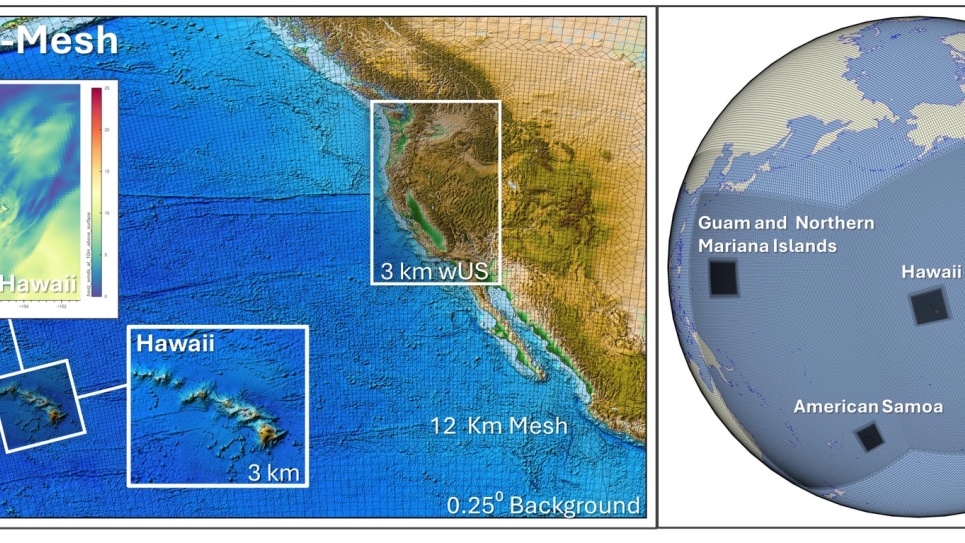
Leveraging DOE leadership-class machines like Aurora, DOE scientists are able to push E3SM resolutions down to the sub-kilometer scale over the continental U.S. using a Regionally Refined Model (CONUS-RRM) configuration. Image: Ben Hillman, Sandia National Laboratories

Project Summary

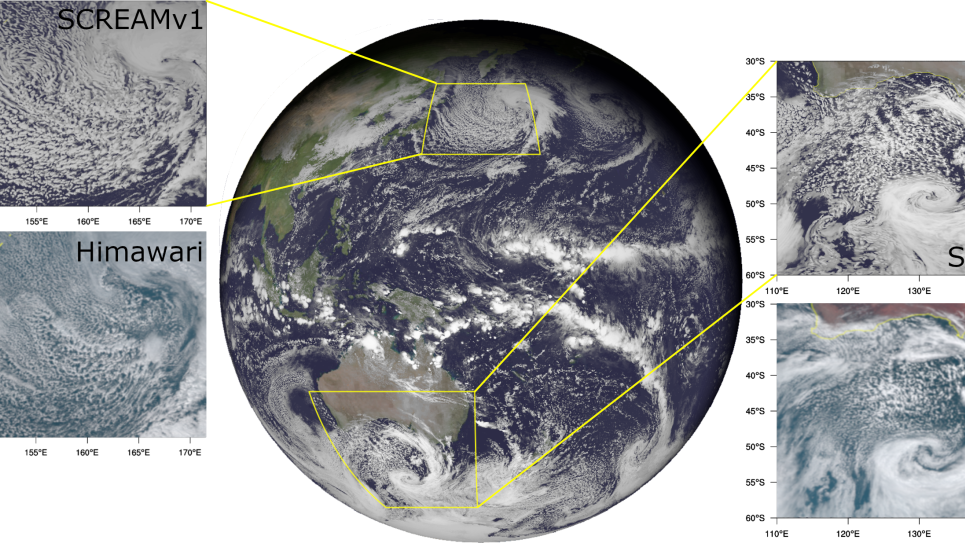
As part of DOE's broader Energy Exascale Earth System Model (E3SM) project, researchers are using exascale supercomputers to evaluate the SCREAM model through real-world simulations at an unprecedented 200-meter resolution.

Project Description

SCREAM is a global atmospheric model designed to operate at kilometer-scale resolutions. By utilizing a resolution 30 times finer than most other models, SCREAM delivers more precise predictions and offers detailed, location-specific insights essential for understanding both local and global atmospheric phenomena. However, this high level of detail requires significant computational power, limiting its use to leadership-class computational systems. The objective of this project is to evaluate SCREAM using real-world simulations over the continental United States at an unprecedented 200-meter resolution.

Allocations