ALCF projects cover many scientific disciplines, ranging from biology and physics to materials science and energy technologies. Filter ongoing and past projects by allocation program, scientific domain, and year.
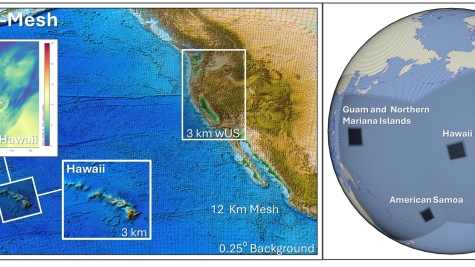
High-Resolution GPU-Enabled SCREAM RRM Simulations for Extreme Weather and Climate Events
This project uses the SCREAM atmospheric model on DOE supercomputers to generate high-resolution climate simulations of extreme weather across the Pacific and U.S. regions through mid-century, producing publicly available datasets to support studies of climate risk, infrastructure resilience, and regional impacts.
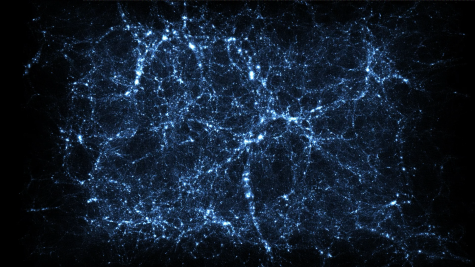
Probing the Primordial Universe with Exascale Simulations
This project uses the HACC cosmology code on exascale supercomputers to run large-scale simulations of the universe’s evolution, generating synthetic galaxy catalogs and high-precision datasets to support the interpretation of upcoming cosmological surveys and improve understanding of early-universe physics.
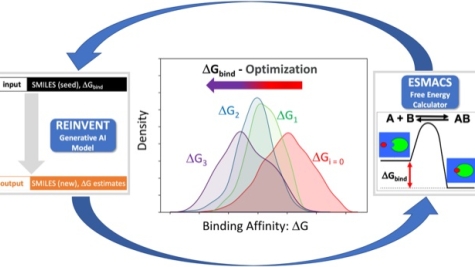
COMbining deep-learning with Physics-Based affinIty estimatiOn 3 (COMPBIO3)
Through the use of exascale computing resources, this project aims to develop a personalized digital twin of the human body, integrating cardiovascular simulations and machine learning–driven drug discovery to support clinical decision-making and therapeutic development.
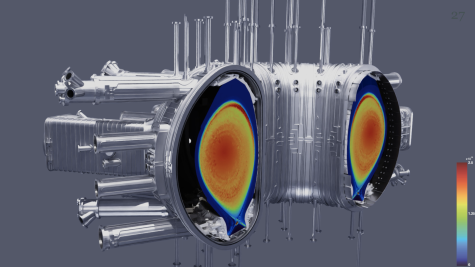
Exascale Gyrokinetic Study of ITER Challenge on Power-Exhaust and ELM-Free Edge
This project uses the XGC electromagnetic edge gyrokinetic PIC code on exascale supercomputers to study plasma edge physics in fusion devices, focusing on heat-flux mitigation and edge-localized mode control in ITER-relevant and fusion power plant conditions.
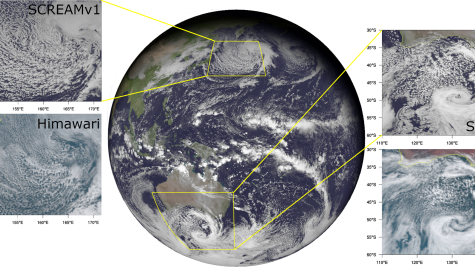
Energy Exascale Earth System Model
This project uses the SCREAM global atmosphere model at 3 km resolution on leadership-class supercomputers to produce high-resolution, decadal-scale climate simulations for improved Earth system prediction and regional impact planning.
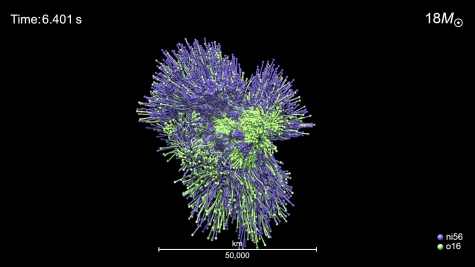
State-of-the-Art High-Resolution 3D Simulations of Core-Collapse Supernovae
This project uses high-performance 3D radiation–hydrodynamics simulations with the Fornax code to model core-collapse supernova explosions across a range of massive star progenitors, enabling detailed analysis of explosion mechanisms and their observable and astrophysical outcomes.
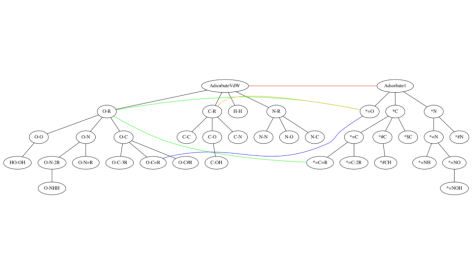
Exascale Catalytic Chemistry
This project develops an open-access database and computational tools for constructing predictive microkinetic models of heterogeneous catalysis, using high-performance simulations to improve accuracy in reaction networks and thermochemical properties for energy-relevant chemical systems.
High-Accuracy Quantum Simulations in Cancer Therapy Using Exascale Computing
This project uses exascale-capable quantum Monte Carlo simulations to study key biochemical interactions in cancer, with the goal of improving mechanistic understanding of cancer therapies and supporting the development of more effective treatments.
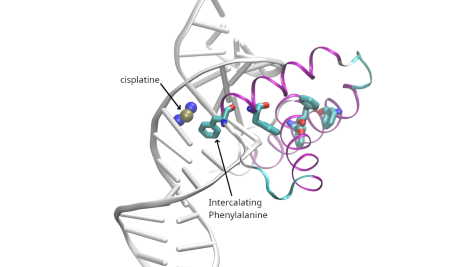
OpenFold-Powered Machine Learning of Protein-Protein Interactions and Complexes
This project develops AI-based methods to predict protein–protein interactions at scale, enabling more comprehensive mapping of the human interactome and advancing the study of cellular signaling and disease mechanisms.
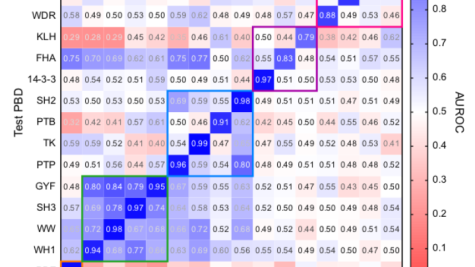
Exploring Exascale Quantum Chemical Methods for Transition Metal Chemistry
This team is using exascale-ready open-source software to exploit advanced, high-level quantum chemical methods to study transition metal systems with non-trivial electronic structure features, then use the data generated to train a machine-learning model that circumvents known limitations of the methods.
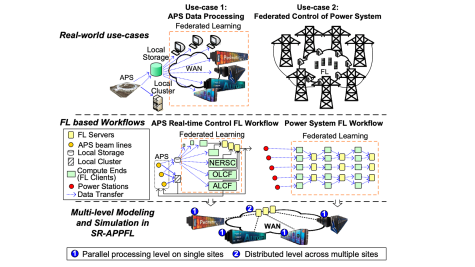
Scalable and Resilient Modeling for Federated Learning Systems and Applications
This project will pioneer advancements in federated learning by fostering more effective simulation and modeling techniques, addressing the critical challenges of scalability and resilience in distributed federated learning systems and the associated scientific workflows.
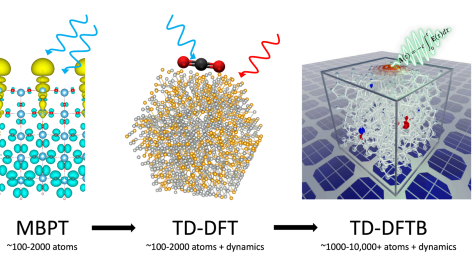
Predicting Heterogeneous Photocatalysts Using Large-Scale Ab Initio Calculations
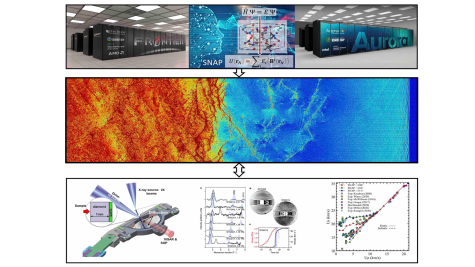
The research in this project will combine massively parallel computer simulations at the Frontier and Aurora supercomputers with modern, quantummechanical theories to understand photocatalysts with unprecedented accuracy and generate new design principles.
High-Energy Density Physics of Novel Inertial Fusion Energy Ablator Materials
The transformative science impact of this team's work is in harnessing the unprecedented power of extreme-scale quantum-accurate MD simulations on exascale Frontier and Aurora to predict novel physical phenomena and guide experiments towards observing them
Foundation Neuroscience AI Model-NeuroX
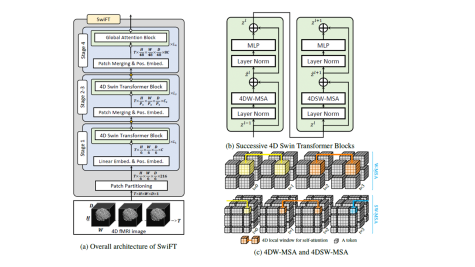
With its successful deployment, this team's foundation model in neuroscience is anticipated to be revolutionary in various scientific disciplines, including neuroscience, medicine, and psychology
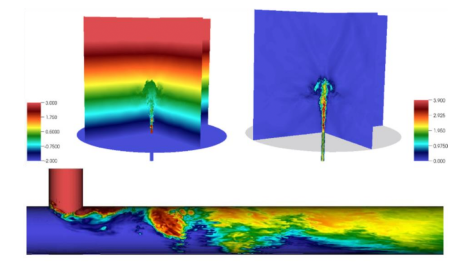
High-Fidelity CFD Enabling Advanced Nuclear Power
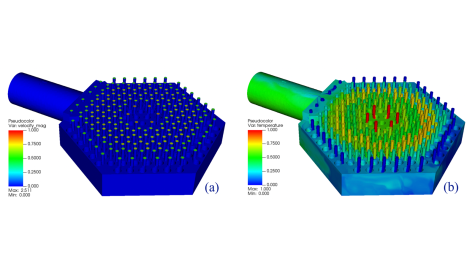
Using state-of-the-art computational tools developed by the Exascale Computing Project and the Nuclear Energy Advanced Modeling and Simulation Program on leadership-class computing facilities, this team sets out to use Computational Fluid Dynamics (CFD) to accurately predict turbulent fluid flow and heat transfer phenomena in a wide range of nuclear power applications.
Exascale Computing for Energy Applications
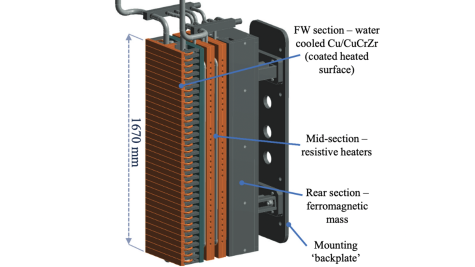
The goal of this project is to advance the DOE’s simulation capabilities in important carbon-free energy sectors, including nuclear, fusion, and wind.
Autonomy for DOE Simulations
The successful outcome of this research will achieve new scientific outcomes that demonstrate the latest potential for HPC, simulation, and AI to hyper-enable engineers to solve humanity's largest challenges, and the business implications of our success in this effort are represented by the $30 trillion opportunity described above.
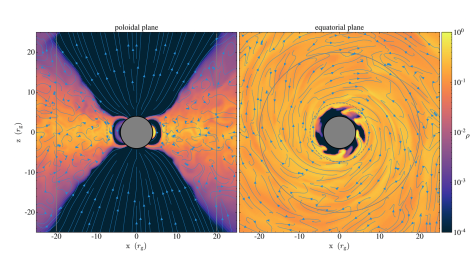
Simulating Large-Scale Long-Lived Neutron Star Remnants from Binary Neutron Star Mergers
This research aims to address this long-standing issue through first-principles simulations, focusing on the prospects of long-lived hypermassive neutron stars (HMNSs) as potential engines for short GRBs (sGRBs).
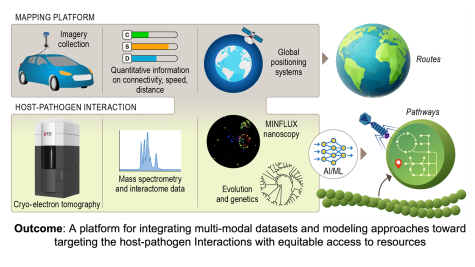
Building Digital Twin of a Model Host-Pathogen System for Enhancing Biopreparedness
The impact of the project will help to develop, implement, and test a platform to assess host-pathogen molecular interactions, adaptation to hosts and host shifts, and coevolution between hosts and pathogens.
DNS of Buoyancy Driven Flows for Developing NN-informed High-fidelity Turbulence Closures
The enhanced understanding of the physics and the ML-based models developed during this project will help improve design, optimization and safety of advanced nuclear reactors and energy systems.