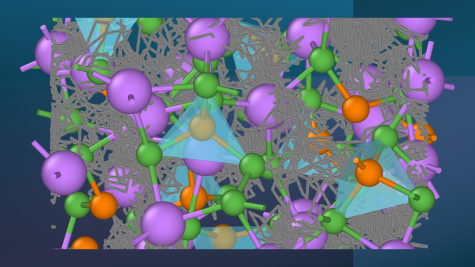
ALCF projects cover many scientific disciplines, ranging from biology and physics to materials science and energy technologies. Filter ongoing and past projects by allocation program, scientific domain, and year.
Development of AI-powered Application for Advanced Nuclear Reactor Design
This project is creating an easy-to-use AI app that taps advanced simulations to quickly test and improve designs for safer, more efficient molten-salt nuclear reactors—reducing time, cost, and expertise needed and helping speed progress toward cleaner energy.

Turbulence Database for Fusion Energy Science
Using powerful supercomputers, researchers will run detailed simulations to map how and when turbulence starts and flows inside fusion plasmas—improving the models engineers use to design next-generation fusion pilot plants and speeding progress toward practical fusion energy.

Hadronic Contributions to the Muon g-2 from Lattice QCD
The muon is a short-lived cousin of the electron that’s about 200 times heavier, and a landmark Fermilab experiment has measured its tiny “magnet strength” with extreme precision; to check whether our best physics theory still holds up, scientists now need equally precise calculations of how the muon’s interaction with the strong force affects that magnetism, using powerful supercomputer simulations.

High-Precision Heterogeneous Catalysis by Quantum Monte Carlo
This project aims to advance the accuracy and reliability of computer-based predictions for catalytic processes, which are vital for developing efficient and sustainable energy technologies. Leveraging state- of-the-art quantum Monte Carlo (QMC) methods and powerful supercomputing resources, the team will produce highly precise datasets to improve understanding and modeling of catalytic reactions, particularly where existing computational methods often fall short, or when the experiments are non-existent.

Exascale Simulation and Deep Learning Model for Energetic Particles in Burning Plasmas
This project will develop the challenging capability for prediction and real-time control of energetic particle (EP) confinement in burning plasmas by combining the state-of-the-art exascale first-principles GTC simulation and the prominent experimentally validated AI/Deep Learning FRNN software
Exascale Models of Astrophysical Thermonuclear Explosions
This project uses high-performance simulations with the Castro code to study thermonuclear processes in Type Ia supernovae and X-ray bursts, focusing on coupled reaction–hydrodynamics phenomena such as flame propagation and detonation in extreme astrophysical environments.

Foundation Models for Crystals
This project develops a large-scale crystal materials dataset and trains a foundation model to predict thermodynamic, mechanical, and thermal properties, enabling more efficient computational design of electrode materials for energy storage and conversion applications.
AuroraGPT: A Large-Scale Foundation Model for Advancing Science
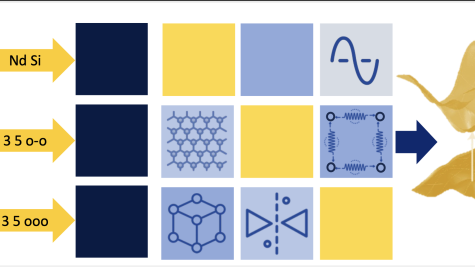
This project develops scientific foundation models through large-scale training, tuning, and evaluation of AI systems on DOE supercomputers, aiming to improve research workflows by integrating advanced language models into scientific discovery across multiple domains.
Hypersonic Transition Control via Porous and Wavy Walls at High Reynolds Numbers
This project uses high-fidelity direct numerical simulations to generate a detailed dataset of hypersonic boundary layer transition processes, supporting improved understanding and modeling of transition control mechanisms relevant to hypersonic vehicle design and thermal management.
Foundation Models for Predictive Molecular Epidemiology
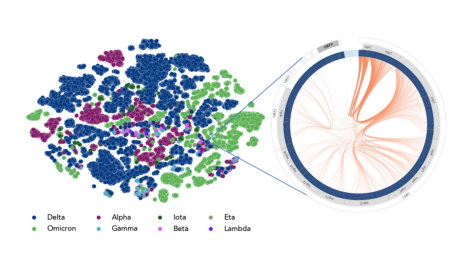
With the support of ALCF resources, this project develops and scales genome-based language models to predict and monitor emerging pathogen variants across diverse organisms, supporting proactive pandemic preparedness and enabling broader research use.
AI-Guided Exascale Simulations of Quantum Materials Manufacturing and Control
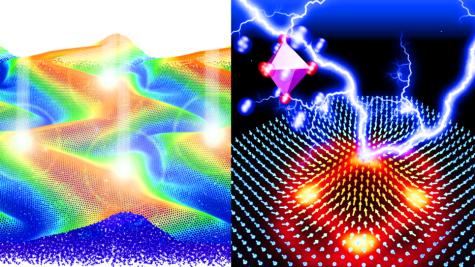
This project uses AI-guided exascale quantum dynamics simulations and advanced experimental validation to study the scalable manufacturing and ultrafast control of layered quantum materials, enabling predictive modeling of emergent quantum and topological properties relevant to quantum technologies.
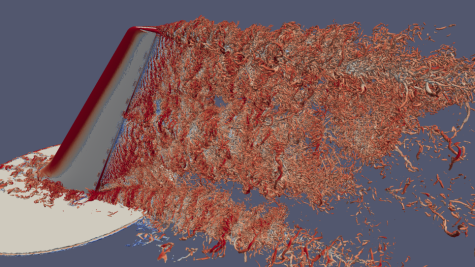
Online Machine Learning for Large Scale Turbulent Simulations
This project develops GPU-accelerated CFD simulations and online machine learning methods to improve turbulence models for large-eddy simulations, enabling more accurate and computationally efficient predictions of complex aerodynamic flows relevant to aerospace and energy applications.
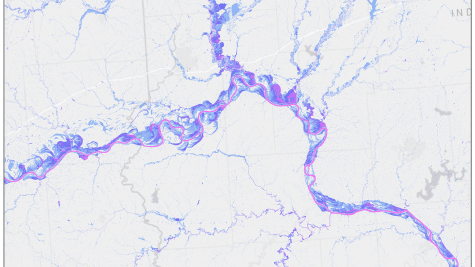
A Climate-Informed, Large-Scale, and High-Resolution Inundation Modeling Framework
This project develops a high-resolution, climate-informed flood inundation modeling framework using GPU-accelerated simulations on exascale supercomputers to assess flood risk to populations and infrastructure under historical and future climate conditions.
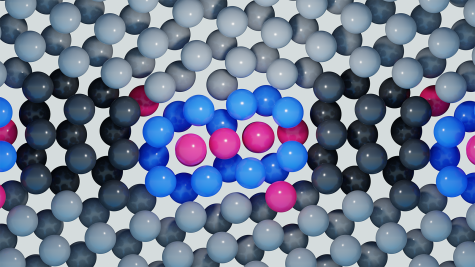
Advancing Fusion Reactor Materials Through Exascale Simulations
This project uses exascale molecular dynamics simulations to study brittle failure and plastic deformation in tungsten polycrystals, with the goal of improving understanding of damage mechanisms and informing the design and manufacturing of more resilient tungsten alloys for fusion energy applications.
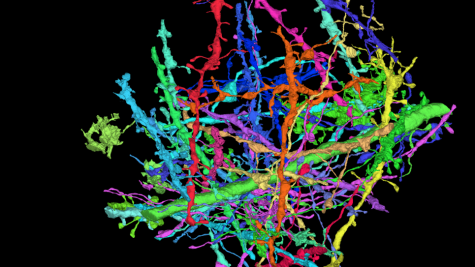
ExaCortex: Exascale Reconstruction of Human Cerebral Cortex
This project uses next-generation electron microscopy, exascale computing, and deep learning to generate large-scale datasets of human brain connectivity, advancing automated reconstruction of neural circuits and supporting future studies of brain function and disease.
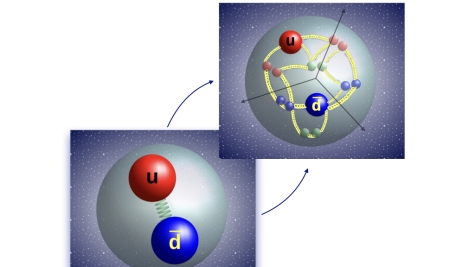
3D Imaging of Strong Interaction Nambu-Goldstone Bosons
This project uses lattice quantum chromodynamics simulations to compute the 3D internal structure of pions and kaons, providing high-precision predictions of their form factors and parton distributions to support experimental studies of the strong nuclear force.
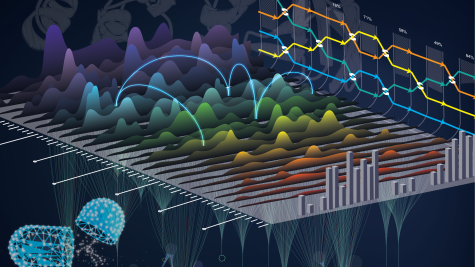
High-Throughput Lead Optimization with AMBER
This project develops an adaptive, high-throughput computational framework for predicting protein–ligand binding affinities within 60 hours, using advanced AMBER-based methods optimized for GPU supercomputing to support rapid lead optimization in drug discovery.
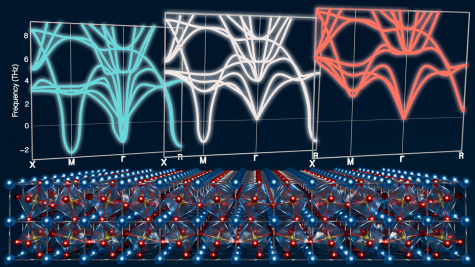
High-Throughput Calculation of Materials Properties at Finite Temperature
This project uses high-throughput lattice dynamics simulations to compute finite-temperature materials properties for large numbers of compounds in the Open Quantum Materials Database, expanding predictive materials data beyond zero-temperature approximations.
QMC-HAMM: High-Accuracy Multiscale Models Using Quantum Monte Carlo
This project uses high-performance quantum Monte Carlo simulations to model electron behavior in materials with high fidelity, enabling improved predictive models of material properties relevant to planetary interiors, optoelectronic defects, and energy storage systems.